Using AI in Recruitment Without Losing Human Oversight
IT Club provides practical technology guidance, not legal advice. Laws, contractual obligations and regulatory requirements vary according to the organisation, sector, data, location and use case. Obtain appropriate legal, data-protection, employment or regulatory advice where required.
Recruitment is where AI risk concentrates: decisions significantly affect people, the data is personal by definition, bias has legal consequences under the Equality Act, and regulators have looked specifically at hiring tools. AI can genuinely help — but not every use is equal, and none of it removes the employer's responsibility for the outcome.
Where AI appears in hiring
- Drafting job advertisements and role descriptions
- CV screening and candidate ranking
- Generating interview questions and scoring frameworks
- Profiling candidates from applications or online information
- Chatbots handling applicant queries and scheduling
These are not equally risky. Drafting an advert that a human reviews is low-stakes. Ranking or rejecting candidates automatically is high-stakes: it profiles individuals, can embed bias at scale and may amount to automated decision-making with significant effects. Not every use of AI in recruitment is unlawful — but the higher-stakes uses carry specific obligations.
The legal pressure points
- 1Discrimination — the Equality Act 2010 applies to recruitment outcomes however they are produced. A tool trained on past hiring data can reproduce past bias against protected groups, and the employer answers for the result.
- 2Automated decisions — UK data protection law restricts solely automated decisions with legal or similarly significant effects, and candidates have rights around them, including meaningful information and human intervention. Rejection by algorithm without meaningful human involvement is exactly the territory these rules target.
- 3Lawful basis and transparency — candidates must be told how their data is used, including AI screening, in clear privacy information. The ICO's audits of AI recruitment tools found real gaps here.
- 4Data minimisation and retention — collect what the decision needs, keep it only as long as justified, and be especially careful with special-category data, which profiling can infer even when never requested.
- 5Accessibility and reasonable adjustments — automated assessments can disadvantage disabled candidates; offer adjustments and alternative routes, and test tools for accessibility.
What meaningful human oversight looks like
- A person with authority and time reviews AI shortlists — and can and does overrule them.
- Rejections are not fully automated; a human owns the decision for candidates who are screened out, not only those who progress.
- The business can explain, in plain language, how candidates were assessed. AI may assist recruitment, but it should not hide how candidates were assessed or remove meaningful human responsibility.
- Outcomes are monitored for patterns across protected characteristics, and anomalies are investigated.
- Candidates have a route to challenge or appeal a decision to a human.
Assessing a recruitment tool before use
Recruitment tools deserve the strongest version of the supplier assessment in this hub: ask the vendor what the model was trained on, what bias testing has been done and how it is documented, what candidate data is retained and where, and how the tool supports explanation, adjustments and appeals. A data protection impact assessment will very often be required for AI-driven candidate screening — and it is worth doing even where arguable, because it forces these questions before real applicants are affected. Keep records of the assessment, settings and decision rationale.
Plain-English Takeaway
Use AI in recruitment where a human meaningfully owns the outcome: drafting and administration freely, screening and ranking only with transparency, bias monitoring, a real human decision for rejections and a route for candidates to challenge. Do a DPIA before, not after.
Related intelligence
A Technology Intelligence article that goes deeper on this topic
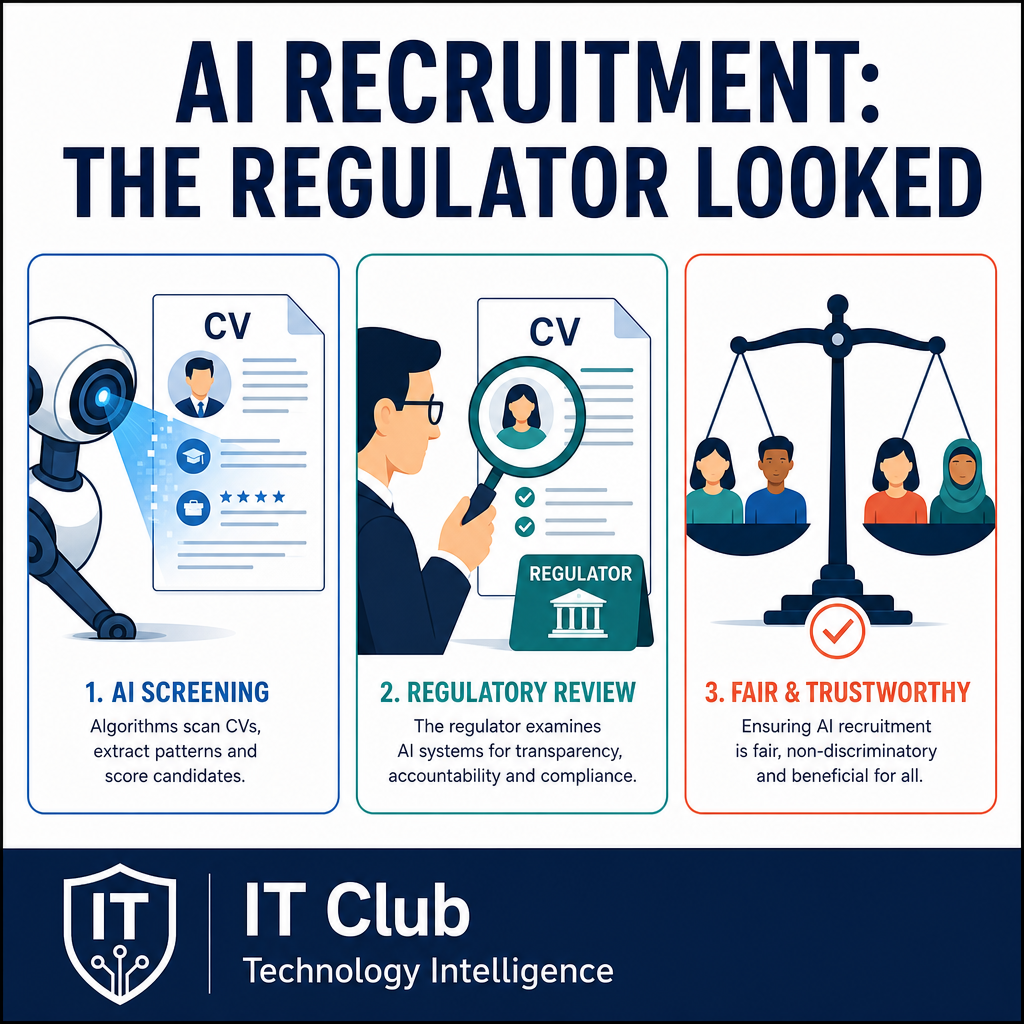
AI Recruitment Tools: What the ICO Found When It Looked
Read the articleSources and further reading
- ICO — AI tools in recruitment: audit outcomes report
- ICO — Automated decision-making and profiling
- EHRC — Artificial intelligence guidance
- GOV.UK — Responsible AI in recruitment guidance
External guidance changes. Check the source itself for the current position before acting on it.